.webp)
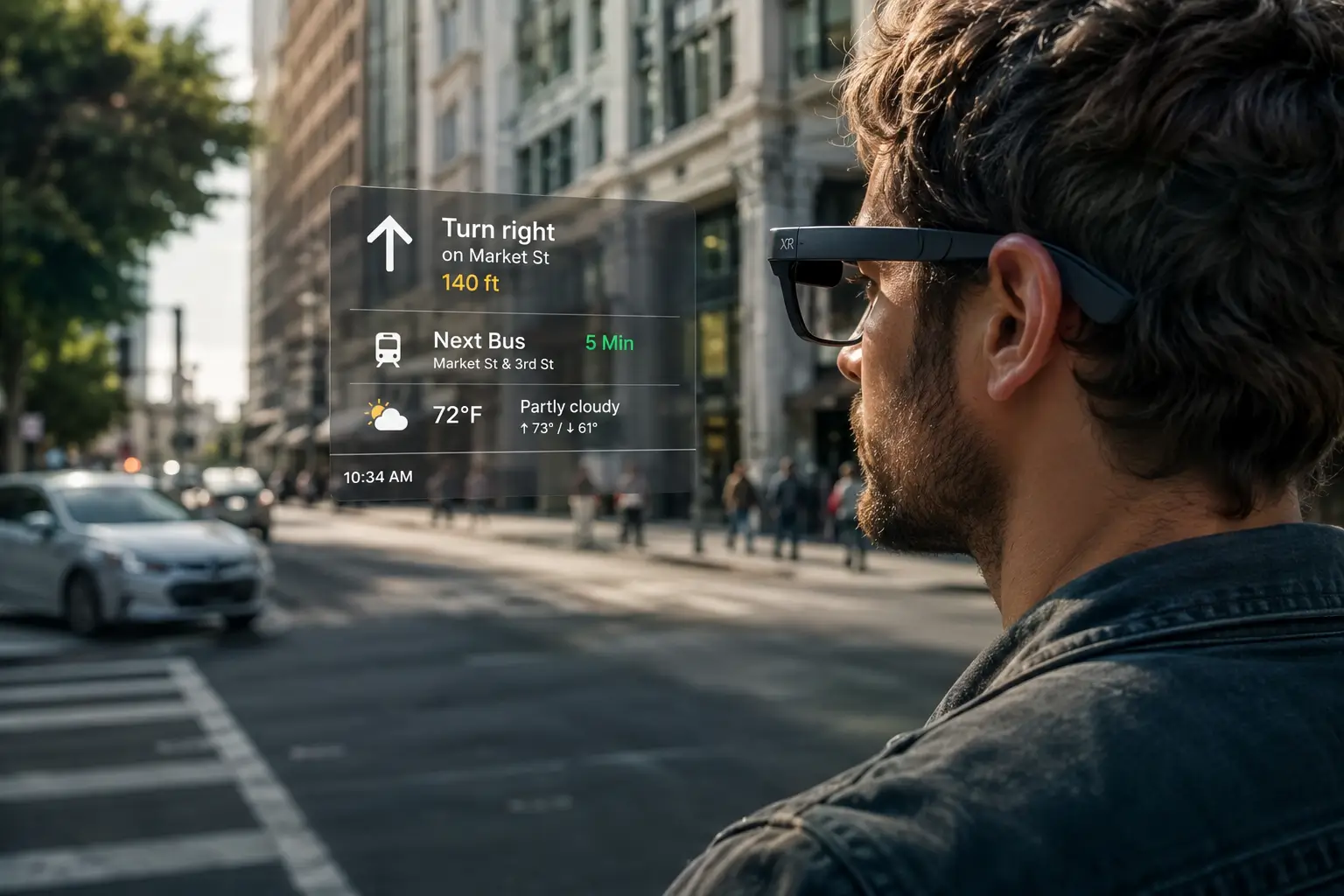
Extended Reality is entering a new phase in 2026. Virtual Reality, Augmented Reality and Mixed Reality are no longer focused only on bulky headsets and gaming. The industry is increasingly moving toward lightweight glasses, artificial intelligence assistants and everyday experiences that blend digital information with the physical world.
The biggest change happening right now is the connection between XR and AI. Companies including Google, Samsung, Meta and Qualcomm are investing heavily in devices that can understand what users see, hear and ask, while providing information without requiring them to constantly look at a smartphone.
Google Is Bringing Gemini Into XR Glasses
One of the biggest recent developments came from Google during Google I/O on May 19, 2026. Google announced new intelligent eyewear powered by its Android XR platform and Gemini artificial intelligence.
Google said its upcoming eyewear will come in two main forms. Audio glasses will provide spoken assistance, while display glasses will show information directly in the users field of view. The company also revealed partnerships involving Gentle Monster, Warby Parker and Samsung, with the first audio glasses expected in fall 2026.
This is important because it changes the role of XR. Instead of putting users inside a completely virtual environment, the technology can provide useful information while they remain connected to the real world.
Imagine walking through an unfamiliar city and receiving directions through your glasses. A worker could receive instructions while repairing equipment. A student could see additional information about an object in front of them. A traveler could receive translation assistance without constantly checking a phone.
Samsung Galaxy XR Is Showing What Comes Next
Samsung is also becoming a major name in the XR market. The company launched the Galaxy XR in late 2025 as part of a broader partnership with Google and Qualcomm.
Google has continued improving the Android XR experience throughout 2026. On April 7, Google announced several updates for Galaxy XR, including the ability to transform traditional two dimensional apps and content into three dimensional experiences. Users can also place applications on physical walls, see their real hands while interacting with virtual content and resume previous sessions more easily.
The development is significant for businesses because companies do not necessarily need to build completely separate experiences for every XR device. Existing applications and websites can increasingly become part of spatial computing environments.
For example, an online retailer could allow customers to examine products in a virtual space. An architecture company could allow clients to walk through a building before construction begins. A training company could create realistic simulations without requiring users to travel to a physical training facility.
Smart Glasses Are Becoming the Bigger Story
While VR headsets remain important, smart glasses are attracting increasing attention because they can be used for longer periods without completely blocking the users surroundings.
Google announced at I/O 2026 that its intelligent eyewear will combine AI assistance with hands free interactions. The company demonstrated functions such as directions, messaging, photography and access to phone applications.
Meta is also pushing aggressively into AI enabled glasses. Recent industry coverage shows that Meta has established a strong position in the smart glasses market through its Ray Ban partnership, while Google, Samsung and Apple are developing competing products.
This competition could make 2026 an important year for wearable computing.
The smartphone is still the center of digital life, but XR companies are trying to make technology less dependent on screens. Instead of opening an application, users may eventually ask an AI assistant for information and receive it directly through their glasses.
XR Hardware Is Also Facing New Challenges
The industry is not without problems. Hardware prices, battery life, comfort, privacy and processing power remain major concerns.
Qualcomm recently notified hardware partners about a planned increase in Snapdragon processor prices starting September 1, 2026. This matters because Qualcomm chips are widely used in standalone XR hardware, including major headset platforms. Higher component costs could make future devices more expensive or put additional pressure on manufacturers.
Privacy is another major issue. Smart glasses can contain cameras, microphones and AI systems capable of interpreting the surrounding environment. Recent discussions around AI glasses have raised concerns about people being recorded without their knowledge and about how visual information could be processed.
These concerns will become more important as glasses become smaller and less noticeable.
How Businesses Can Benefit From XR
Businesses do not need to wait for XR to become a replacement for smartphones before experimenting with it.
Retailers can use AR to let customers preview furniture, clothing and other products. Real estate companies can create immersive property tours. Manufacturers can provide technicians with visual repair instructions. Healthcare organizations can use simulations for education and training. Universities can create virtual laboratories and interactive learning environments.
There is also a growing opportunity for software developers.
Google is building Android XR with developer technologies including Android Studio, Unity and OpenXR, giving developers familiar tools for creating XR applications.
This means developers who already understand mobile applications, web applications, 3D environments or AI could potentially expand into XR without starting completely from scratch.
What Is Coming Next
The next major battle in XR may not be between VR headsets. It may be between intelligent glasses that people can comfortably wear throughout the day.
Google is preparing its intelligent eyewear for fall 2026. XREAL is also expanding its Android XR relationship, with XREAL AURA expected to arrive in the fall and reservations already opened following AWE 2026.
At the same time, Meta continues developing AI glasses, Samsung is building around Android XR and Apple is reportedly exploring its own smart glasses strategy.
The direction is becoming clear. XR is moving from an experience that users deliberately enter into a technology that can stay with them throughout the day.
For consumers, that could mean more natural access to information. For businesses, it could create new ways to train employees, sell products and interact with customers. For developers, it represents another emerging platform where AI, software and physical environments can come together.
The biggest XR story of 2026 may therefore not be about escaping into virtual worlds. It may be about making the real world smarter.