.webp)
A few years ago, every conversation about virtual and augmented reality got dragged into the metaverse mess. Somewhere in that noise, people stopped separating the actual technology from the marketing fantasy built on top of it. That was a mistake, and 2026 is the year it's becoming obvious.
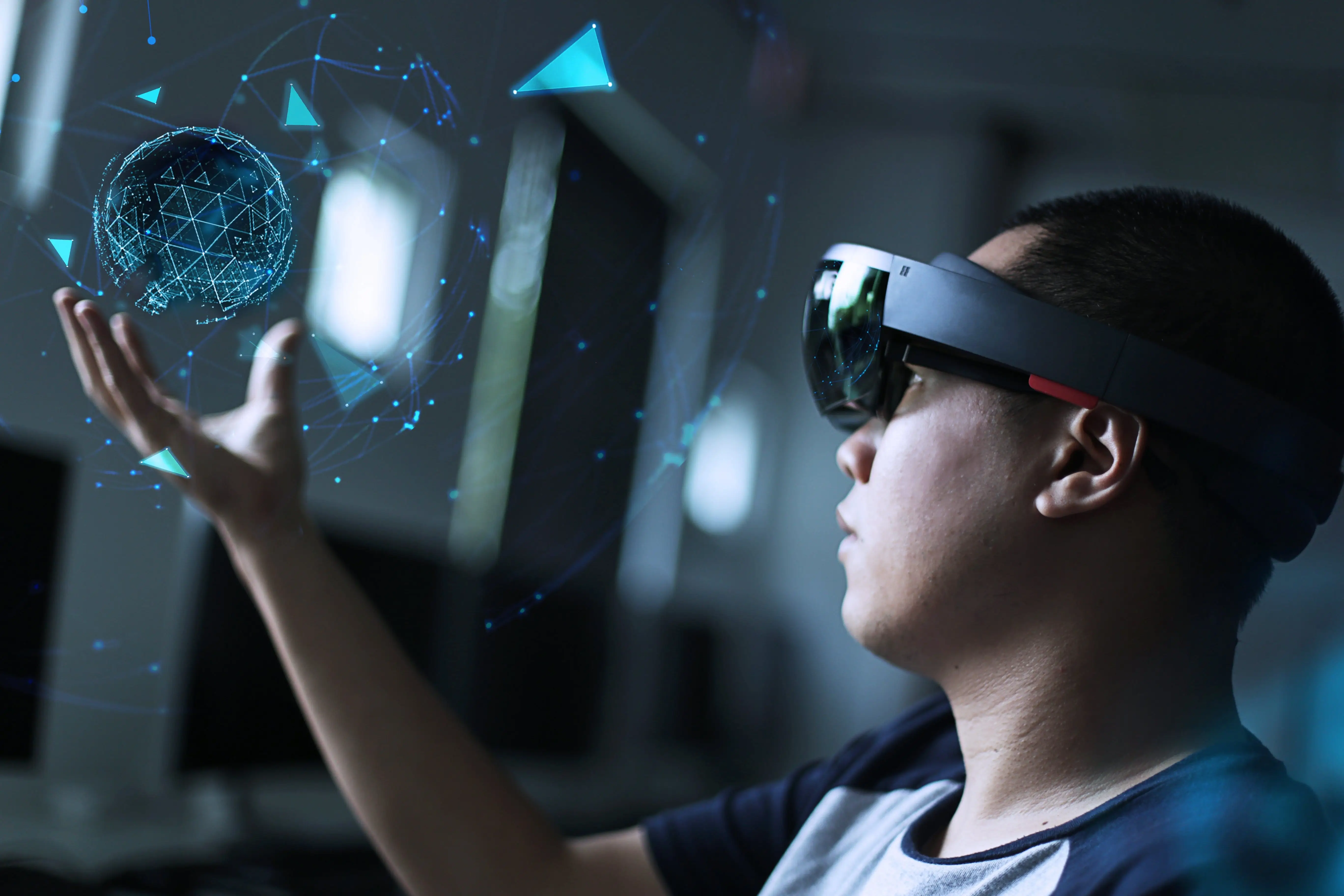
Extended reality, the umbrella term covering VR, AR, and mixed reality, is not waiting around for anyone's vision of a persistent 3D internet. It's already sitting inside manufacturing plants, hospital training wards, and field service workflows, quietly doing a job. Enterprise adoption is now outpacing consumer entertainment use, and that shift tells you everything about where the real value was hiding the whole time.
What Changed Between the Hype Cycle and Now
The old pitch for XR was immersion for its own sake. Put on a headset, feel amazed, repeat. That pitch does not survive contact with a CFO.
What survives is a much more boring question: does this reduce training time, cut error rates, or save a technician from flying out to a site. Once XR got measured against that bar instead of the "wow factor" bar, a lot of the noise fell away and the technology that remained had to actually work.
A few things are driving that shift right now.
Training got expensive to do the old way. Simulating a hazardous procedure, an expensive piece of equipment, or a high-stakes customer interaction in the real world costs money and carries risk every single time you run it. Do it once in VR and you can run it a thousand times for a fraction of the cost, with none of the downside if someone gets it wrong.
AR remote assistance solves a labor problem, not a novelty problem. Skilled technicians are hard to find and harder to keep in every region. Giving a junior technician AR-guided instructions from a senior expert sitting somewhere else is not a party trick anymore, it's how a lot of field service teams are staying staffed.
Hardware finally stopped being the bottleneck. Devices from Meta, Pico, and HTC have matured to the point where IT departments can manage them the same way they manage laptops and phones, with device provisioning, security policies, and lifecycle management built in rather than bolted on.
The Part Most Companies Get Wrong
Here's where I'll push back on how a lot of businesses are approaching this. XR content and XR data are not disposable. A training simulation, a digital twin of your production line, a library of AR service instructions, these become operational assets the moment you build them. Yet a huge number of companies are building this stuff on top of closed platforms and proprietary SaaS ecosystems they don't control.
That's the same mistake I've watched businesses make with every other wave of new technology. You build something valuable, you build it on rented land, and eventually the rent goes up or the landlord changes the rules. If your training content, your digital twins, or your spatial data live entirely inside one vendor's walled garden, you don't actually own your infrastructure. You're leasing your own operational knowledge back from someone else.
The businesses getting this right are the ones asking data ownership and portability questions before they commit to a platform, not after they've built three years of training content on top of it. Where you can run XR content pipelines on infrastructure you control, or at minimum keep your source assets exportable, do it. The device is not the asset. The content and the data underneath it are the asset.
Where XR Is Actually Delivering Right Now
Cutting through the market projections, a few use cases are consistently where the ROI shows up.
Training and onboarding. New hires rehearse complex or risky tasks in a simulated environment before touching real equipment. Managers get consistent competency assessment across locations instead of relying on whoever happened to train someone that week.
Industrial simulation. Manufacturing teams are modeling entire production line changes virtually before committing capital to physical retooling. That compresses iteration cycles that used to take months into days.
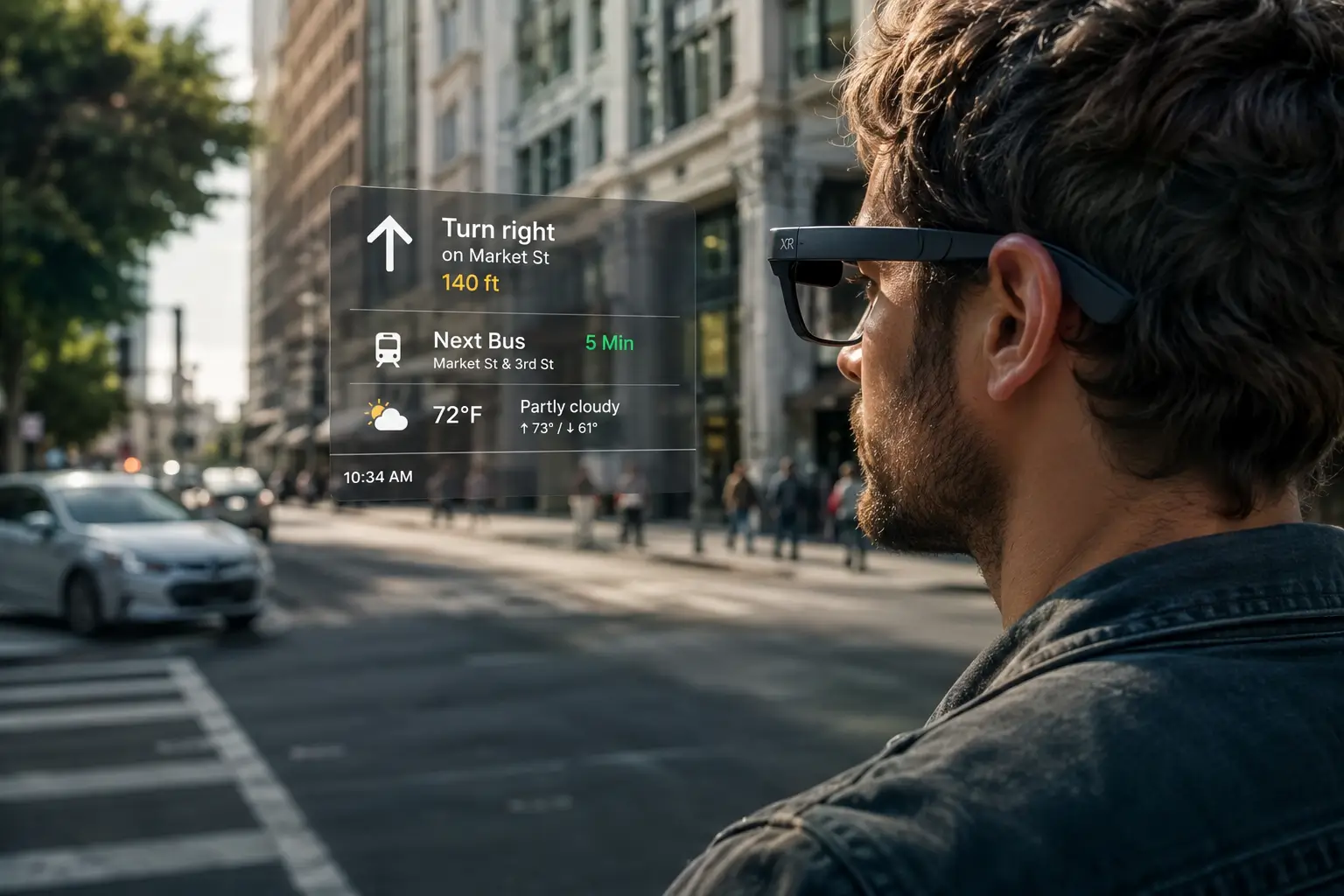
Remote expert assistance. A technician wearing AR glasses gets live overlay guidance from an expert who is not physically on site. This is one of the clearest labor shortage fixes XR has produced.
Retail and configuration. AR try-ons and product configurators are measurably increasing purchase confidence and cutting return rates, which is a rare case of XR paying for itself in a way that's easy to point to on a spreadsheet.
Healthcare simulation. Surgical rehearsal and therapeutic VR applications are among the fastest growing segments, because the cost of a mistake in a simulated environment versus a real one is not close.
Where XR Still Needs Human Judgment in the Loop
None of this means XR should be running unsupervised. A training simulation that's out of date is worse than no simulation at all, because people trust it. A digital twin that's drifted from the real production line gives you false confidence right up until something breaks. The programs that stay useful are the ones where a human is still checking that the simulated environment matches reality, not treating the system as something you build once and walk away from.
That's the same principle that applies to every automated system I've worked with. The technology is a force multiplier for good judgment. It is not a replacement for it.
The Bottom Line
XR in 2026 is not a bet on some future metaverse. It's a practical tool that is already saving companies money on training, reducing field service costs, and cutting errors in high-stakes environments. The businesses that will get the most out of it are the ones treating it the way they'd treat any other piece of core infrastructure: own what you can, keep your data portable, and keep a human checking that the simulation still matches the real world.