.webp)
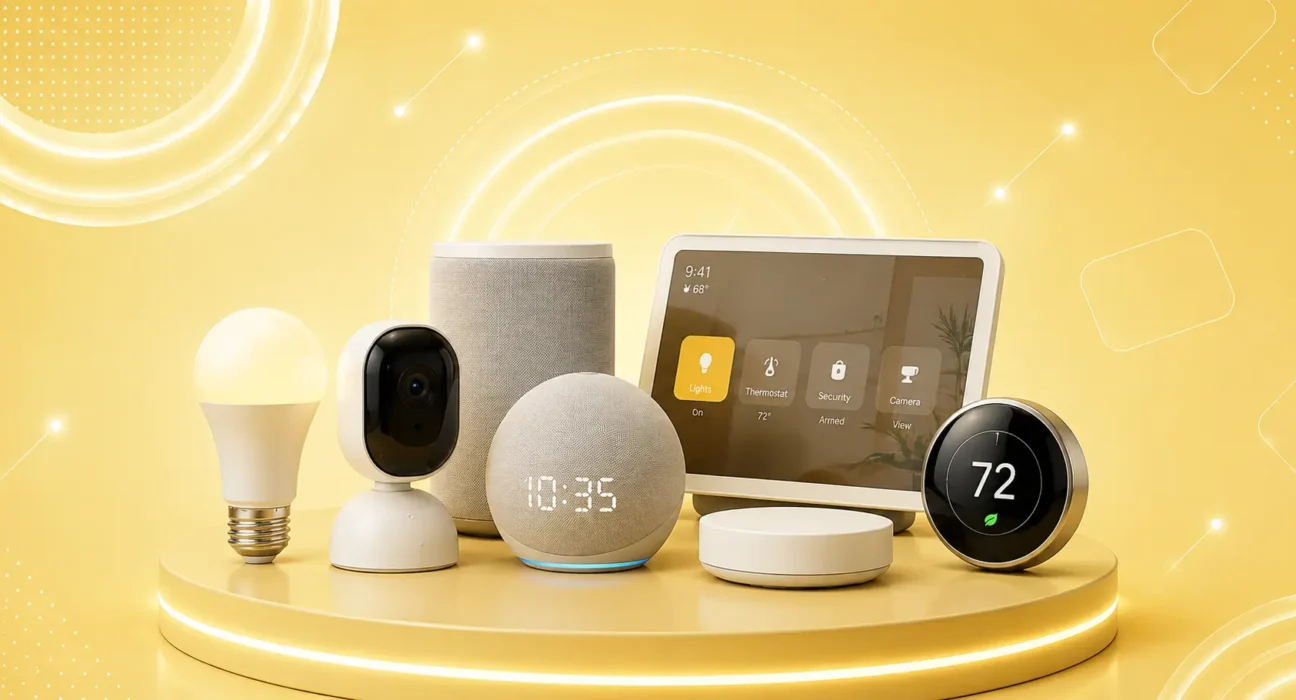
For years, "smart home" meant a smart bulb you controlled from your phone and not much else. That's not the case anymore. Over half of US households now run at least one connected device, and the global smart home market has crossed the $160 billion mark in 2026. Gen Z and millennials are driving most of that growth, and they're not buying gadgets for the novelty. They want their homes to actually do something useful, like cutting energy bills, catching a package thief, or reminding them the stove is still on.
What changed isn't just adoption. It's that the biggest names in tech finally got their products talking to each other.
Matter Made the Big Brands Play Nice
If you tried building a smart home a few years ago, you know the pain. A Google Nest speaker that wouldn't talk to your Amazon Echo lock. A thermostat stuck in its own app with its own login. Matter, the cross-platform standard backed by Amazon, Google, Apple, and Samsung, has quietly fixed most of that. Devices carrying the Matter label now pair with whichever ecosystem you already use, whether that's Alexa, Google Home, or Apple HomeKit, without needing three separate hubs sitting in a drawer.
The new Google Home Speaker, launched this year to replace the aging Nest Audio, is a good example of this shift in action. It ships with a built in Thread border router and full Matter hub support, so it doesn't just play music, it becomes the backbone for every other Matter certified device in the house, even ones from brands Google doesn't own. On the Amazon side, the Echo Dot Max and the larger Echo Show 8 and Echo Show 11 do the same job for Alexa households, giving you a screen for camera feeds, recipes, and smart home dashboards without needing a separate tablet mounted on the wall.
AI Personalization Is the Real Upgrade, Not the Marketing Buzzword
Voice assistants used to be glorified timers. In 2026, they're closer to a home operations manager. Amazon's Alexa+ and Google's Gemini powered assistant can now recognize patterns, like when you usually leave for work, and adjust the thermostat before you wake up, or flag that the garage door has been open longer than usual. This is predictive automation, not reactive commands.
Ecobee and Nest thermostats are the clearest example. Instead of running on a fixed schedule, they learn occupancy patterns and adjust heating and cooling automatically. Some households report cutting annual energy bills by double digits just from that one device. Energy management is currently the fastest growing segment in the entire smart home category, and it's easy to see why. It's the rare feature that pays for itself.
Security Cameras Are the Fastest Growing Category, and for Good Reason
Smart security is no longer just a camera that pings your phone every time a leaf blows past. Ring, Nest Cam, and Arlo have all pushed their 2026 lineups toward on device AI that can tell the difference between a person, a package, a car, and your dog, cutting down on the false alerts that made people ignore notifications altogether. Ring's newer models pair this with 2K video and package detection, while Nest Cam ties directly into Google's broader Gemini powered home system for richer alerts.
For a household, the real use case is peace of mind that doesn't require babysitting an app. A delivery shows up, the camera tags it correctly, and you get one clean notification instead of ten motion alerts triggered by a passing car.
Locks, Lighting, and the Rest of the Ecosystem
Philips Hue remains the standard for smart lighting, now with deeper Matter support so its bulbs and light strips work natively inside Alexa, Google Home, and Apple Home without a proprietary bridge getting in the way. On the lock side, August and Yale continue to dominate, both offering Matter certified models that let you ditch the key entirely while still keeping a physical backup for when the Wi Fi goes down. Samsung's SmartThings platform ties a lot of this together for people who want one dashboard across brands instead of jumping between five different apps.
Robot vacuums have also matured well past bumping into furniture. iRobot's Roomba and Ecovacs' Deebot lines now map entire homes room by room, avoid cables and pet messes, and can be told to clean a specific room on command through Alexa or Google Home.
Getting Started Without Overbuilding
You don't need a whole ecosystem on day one. A single smart speaker like the Echo Dot Max or Google Home Speaker, a Ring or Nest video doorbell, and an Ecobee thermostat cover the three areas people actually care about, control, security, and savings. Add a Matter certified device from there and expand only when something specific is annoying you enough to automate it. That's a better filter than buying whatever CES just hyped.
Smart homes in 2026 aren't about having the most devices. They're about having the right ones from brands people already trust, talking to each other properly, and making everyday life genuinely easier.