.webp)
Serverless architecture has moved past the experimental phase. What used to be a niche approach for small functions and side projects is now running production systems at some of the biggest companies in the world. But the term still confuses a lot of people, especially business owners trying to decide how their next application should be built. This article breaks down what serverless actually means today, how it compares to the traditional server model, which types of applications fit each approach, what has changed recently, and how we at TechStop think about this choice when we sit down with a client.
What Serverless Architecture Actually Means
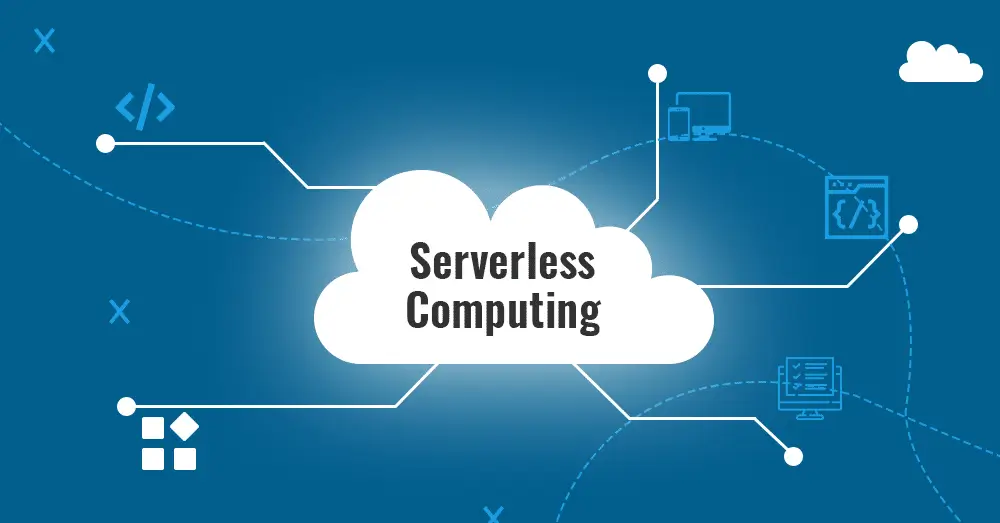
Despite the name, serverless does not mean there are no servers involved. Servers still run your code. The difference is who manages them. In a traditional setup, your team or a hosting provider has to provision servers, patch operating systems, plan for peak traffic, and pay for that capacity even when nobody is using the app. In a serverless setup, you write small pieces of code called functions, and the cloud provider handles everything else. It runs your function only when something triggers it, scales it up instantly if ten thousand people show up at once, and scales it back down to zero when nobody is using it. You are billed for the exact time your code runs, not for idle servers sitting around waiting for traffic.
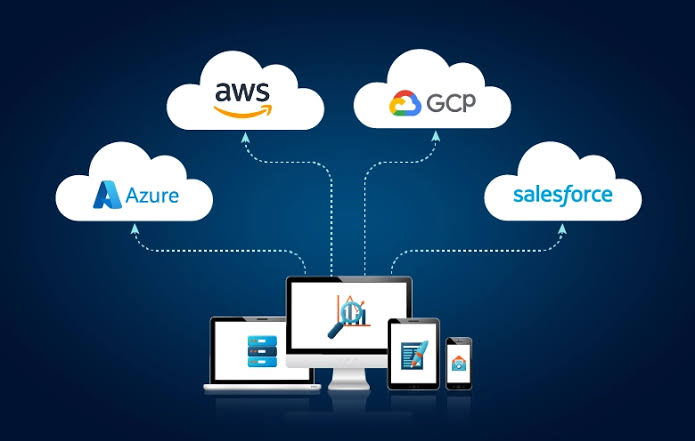
This is why serverless is often described through the acronym FaaS, which stands for Function as a Service. Amazon Web Services popularized this idea with AWS Lambda back in 2014, and since then Google, Microsoft, and Cloudflare have all built their own competing versions.
How Adoption Actually Works Right Now
Adoption of serverless is no longer limited to startups experimenting with side projects. Surveys from the past year show that around two thirds of enterprises are either already using serverless or actively planning to adopt it within the next year and a half. Companies that have made the switch commonly report cutting infrastructure costs by sixty to seventy percent and speeding up their deployment cycles significantly, simply because there is no server maintenance slowing teams down.
The typical adoption path looks like this. A company starts by moving a single non critical piece of their system to serverless, often something like a background job, an image processing task, or a webhook handler. Once that proves stable, teams move on to APIs, then event driven workflows like order processing or notification systems, and eventually entire backend systems built as a collection of small functions working together. Very few companies flip a switch and move everything overnight. It tends to be gradual, function by function.
Serverless vs Traditional Servers: A Real Comparison
The traditional approach means you rent or own a server that runs continuously, whether anyone is using your app or not. You are responsible for keeping it patched, secure, and scaled correctly for your traffic. The advantage is predictability. You know exactly how your environment behaves, you have full control over the operating system, and if your app runs constantly at high traffic, a well sized traditional server can actually be cheaper than paying serverless rates for every single request.
Serverless flips that model. You only pay when code runs, scaling happens automatically without anyone touching a dashboard, and there is effectively no server to secure or patch because the provider handles that layer. The tradeoff is less control over the environment, and if your workload runs constantly at a steady, predictable level, serverless pricing can actually end up more expensive than a traditional server would have been.
Which Applications Fit Which Model
Serverless tends to be the better choice for applications with unpredictable or spiky traffic, such as an ecommerce site during a flash sale, a chatbot backend, scheduled background jobs, webhook processors, or APIs that see occasional bursts of activity rather than constant steady load. It also fits modern AI powered features well, such as a document processing pipeline that only runs when a user uploads a file.
Traditional servers still make more sense for applications that need constant, predictable resource usage, such as a busy database server, a video streaming backend handling continuous high load, or software that requires very specific operating system level control that a managed serverless environment simply will not allow. Applications with strict, split second latency requirements involving heavy dependencies also sometimes fit traditional infrastructure better, though this gap has narrowed significantly over the past year.
What Actually Happened Recently
A few concrete changes have shaped where serverless stands today. AWS introduced a feature called SnapStart, which takes a snapshot of an already initialized function and resumes from that snapshot instead of booting up from scratch every time. This originally only worked for Java functions but has since expanded to Python and Go, cutting typical cold start delays by as much as ninety percent.
Cloudflare, meanwhile, rebuilt its entire pricing model for its Workers platform. Instead of charging for the total time a function runs, including time spent simply waiting on a database or an external API to respond, it now only charges for actual active processing time. This directly targets one of the biggest cost complaints people had about the older serverless billing models.
Microsoft has also pushed its Azure Functions platform forward, with its newer Flex Consumption plan now able to spin up more than a thousand function instances in under ten seconds, closing a scaling gap that used to favor AWS and Cloudflare.
On the technical side, the old complaint about serverless functions being too slow to start up for the first time, known as a cold start, has largely been solved through these snapshotting and edge based techniques. The newer conversation in the industry has shifted toward a different problem: statefulness. Serverless functions were originally designed to be short lived and forget everything between requests, which works great for simple tasks but becomes a real limitation for AI agents that need to hold context and coordinate multi step tasks over time. Tools like AWS Step Functions, Azure Durable Functions, and Cloudflare Durable Objects have emerged specifically to solve this, letting developers build long running, stateful workflows on top of what used to be a purely stateless model.
The TechStop Perspective
At TechStop, we do not treat serverless as a trend to chase or a buzzword to put on a proposal. We treat it as one tool among several, and the right choice always comes down to what the client is actually building. Serverless has genuinely improved and it clearly has its place for bursty traffic, background jobs, and event driven tasks. But for a business's core application, one meant to run reliably for years, we still lean toward traditional servers. Full control over the environment, predictable performance, and stable long term costs matter more than the convenience serverless offers. Newer does not always mean better, and the fundamentals of a well managed server still hold up.