.webp)
Most companies start their enterprise digital transformation journey with a pitch deck and a roadmap. They plan new software, new workflows, and new customer experiences. Then they run headfirst into the same wall: the old infrastructure underneath can't support any of it.
This is the part nobody talks about enough.
You can have the best digital strategy in the world — AI-powered applications, seamless API integrations, automated pipelines — but if your infrastructure is held together with legacy servers, outdated databases, and manual deployments, none of it will survive contact with real scale.
Infrastructure modernization isn't a prerequisite to digital transformation. It is digital transformation — at least the part that actually works.
What Enterprise Digital Transformation Actually Means in 2026
The term gets thrown around a lot. At its core, enterprise digital transformation is the process of fundamentally changing how a business operates by replacing manual, siloed, or outdated systems with integrated, automated, and scalable digital alternatives.
That means:
Replacing legacy software with cloud-native or API-first systems
Automating repetitive operations using AI and workflow tools
Connecting disconnected departments through system integration
Making data accessible, real-time, and actionable across the organization
The goal is not to "go digital" for its own sake. The goal is to reduce operational drag, move faster, and serve customers better — all at the same time.
But here's what separates enterprises that actually achieve this from those that run expensive transformation programs and end up back where they started: the infrastructure underneath either enables the transformation or it kills it.
Why Infrastructure Modernization Is the Foundation, Not an Afterthought
Think of enterprise infrastructure as the plumbing in a building. You can renovate every room — new paint, new furniture, new fixtures — but if the pipes are corroding behind the walls, everything eventually breaks.
Legacy infrastructure typically looks like this:
On-premise servers with unpredictable uptime and high maintenance costs
Databases that weren't designed for modern API consumption
Deployment processes that require manual intervention and create bottlenecks
No CI/CD pipeline, meaning updates take weeks instead of hours
Security postures built for a perimeter that no longer exists
Infrastructure modernization is the process of replacing or upgrading these systems to support the speed, scale, and flexibility that digital transformation demands.
In practice, this involves:
1. Moving to Cloud-Native Architecture
Cloud solutions eliminate the ceiling on what your systems can handle. Instead of planning for peak load and over-provisioning expensive hardware, cloud infrastructure scales automatically with demand. You pay for what you use. You stop worrying about physical failure. Your team focuses on building product instead of managing servers.
At TechStop, our cloud migration approach prioritizes minimal disruption. We assess your current environment, identify what moves first, and build a migration plan that keeps your systems running while we modernize them underneath.
2. Implementing DevOps and CI/CD Pipelines
One of the fastest wins in infrastructure modernization is shortening the gap between writing code and shipping it. Without a proper DevOps culture and CI/CD pipeline in place, updates get batched, bugs sit unresolved, and teams move slowly.
With modern DevOps practices:
Code changes are tested automatically before they ever reach production
Deployments happen in minutes, not days
Rollbacks are instant if something goes wrong
Your development team ships with confidence instead of anxiety
This directly accelerates every other part of your enterprise digital transformation. When shipping is fast and safe, your organization can iterate faster, respond to customer feedback in real time, and stop treating software releases as risky events.
3. API-First System Integration
Legacy enterprises are full of disconnected systems — a CRM that doesn't talk to the ERP, a billing platform that doesn't share data with the customer portal, a support ticketing tool that's completely isolated from the sales workflow. Every one of these gaps is a place where information gets lost and employees do manual work to compensate.
System integration through well-designed APIs eliminates this. When your systems can talk to each other, data flows automatically, workflows execute without human intervention, and your teams spend time on work that actually requires judgment — not on copying data between tools.
The Real Cost of Delaying Infrastructure Modernization
Many enterprises delay modernization because it feels expensive and disruptive. And it is — if you do it reactively, under pressure, while something is breaking.
If you do it proactively, the calculus is completely different.
Consider the compounding costs of staying on legacy infrastructure:
Talent drain: Engineers don't want to work on outdated stacks. The best developers leave, and hiring becomes harder.
Slow delivery: Every feature takes longer to build and deploy when the infrastructure isn't designed for it.
Security exposure: Legacy systems accumulate vulnerabilities faster than they can be patched. A single breach can cost more than years of modernization investment.
Opportunity cost: Competitors on modern infrastructure ship faster, experiment more, and adapt quicker. The gap compounds over time.
The enterprises that treat infrastructure modernization as a capital investment — not an IT expense — consistently outperform those that wait.
How to Approach Enterprise Digital Transformation Without the Chaos
Transformation projects fail when they're treated as one big initiative rather than a sequence of smaller, deliberate ones. Here's the framework we use at TechStop:
Phase 1: Discovery and Baseline Assessment
Before touching anything, understand what you have. Map your current infrastructure, identify dependencies, and document where the actual friction lives. Most organizations discover that 20% of their systems create 80% of their operational pain.
Phase 2: Prioritize High-Impact, Low-Risk Wins
Start with modernization work that delivers measurable results quickly without putting core systems at risk. Moving a non-critical workload to the cloud, setting up a CI/CD pipeline for one team, or building an API integration between two frequently-used tools — these are the kinds of wins that build momentum and organizational buy-in.
Phase 3: Modernize Core Infrastructure
Once you've validated the approach and built internal confidence, tackle the harder problems: migrating production databases, re-architecting core applications, implementing organization-wide DevOps standards. This phase takes longer, but by now you have the muscle memory to execute it well.
Phase 4: Build for Continuous Evolution
The goal of infrastructure modernization isn't to arrive at a final state — it's to build a system that can keep evolving. That means automated monitoring, proactive scaling, security policies that update automatically, and teams that know how to use the tooling effectively.
AI-Powered Applications: The Dividend of Good Infrastructure
Once your infrastructure is modernized and your systems are integrated, a new set of possibilities opens up.
AI-powered applications — RAG systems, intelligent automation, predictive analytics — are only viable when the infrastructure underneath them can support them. You need reliable data pipelines, low-latency APIs, cloud-native compute, and deployment processes fast enough to keep models up to date.
This is the real dividend of getting the foundation right. Enterprise digital transformation doesn't stop at operational efficiency. It enables entirely new capabilities: systems that learn from customer behavior, applications that surface insights in real time, workflows that adapt automatically to changing conditions.
At TechStop, we've seen this play out with clients across industries. The ones who invested in infrastructure modernization first unlocked significantly more value from subsequent AI and integration work — because the foundation was there to support it.
What TechStop Brings to Your Transformation
We work with businesses at every stage of this journey — from companies running entirely on legacy infrastructure to enterprises that are already cloud-native but struggling to tie their systems together effectively.
Our enterprise digital transformation services cover:
AI Powered Applications: RAG systems, intelligent automation, and custom AI integrations built on solid data foundations
API Development: Clean, well-documented APIs that connect your systems and enable new workflows
System Integration: Connecting your CRM, ERP, billing, support, and other platforms so data flows where it needs to go
On the infrastructure side:
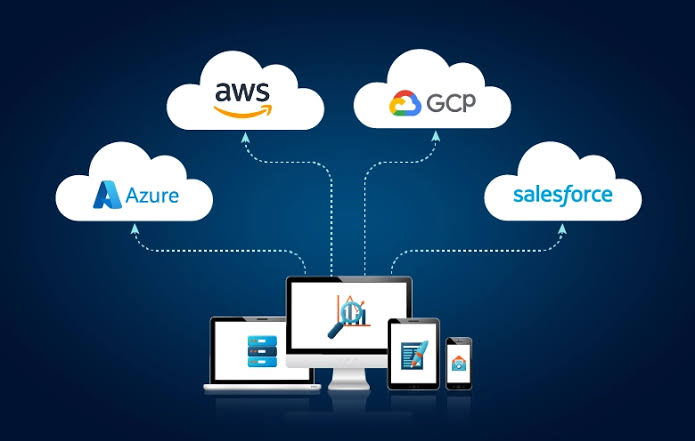
Cloud Solutions: Architecture, migration, and ongoing management across AWS, GCP, and Azure
DevOps & CI/CD: End-to-end pipeline setup, containerization, monitoring, and team enablement
Every engagement starts with a real discovery process — not a template, not a generic proposal. We understand your systems, your constraints, and your actual goals before recommending anything.
Ready to Modernize?
If your enterprise digital transformation has stalled — or if you haven't started yet and you're not sure where to begin — infrastructure modernization is almost always the right first conversation.
The good news: you don't have to do it all at once. You just have to start somewhere.
Get a free consultation from the TechStop team →
TechStop is a technology solutions company helping businesses build, scale, and secure their digital infrastructure. From cloud migrations to AI integration, we work with teams at every stage of enterprise transformation.