.webp)
Data centers are the backbone of modern digital infrastructure. From cloud platforms to SaaS products, everything relies on them. But behind the scenes, they consume massive amounts of energy.
A large portion of this energy doesn’t go into computing. It goes into cooling.
New research shows that AI-powered software could reduce cooling energy usage by up to 25% by making systems smarter and more adaptive.
The Problem with Data Center Cooling
Cooling is essential to keep systems running safely, but it comes at a high cost. Around 40% of a data center’s total electricity is used just to maintain safe temperatures.
Most facilities still rely on fixed cooling settings. These static systems don’t adjust based on changing conditions like weather, humidity, or electricity pricing.
As a result, energy is often used inefficiently, increasing both costs and environmental impact.
The AI-Powered Approach
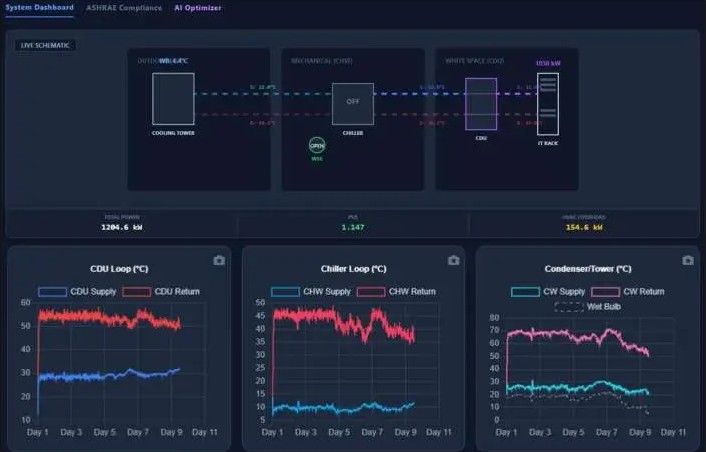
The new approach uses artificial intelligence to dynamically control cooling in real time.
Instead of sticking to fixed targets, the system continuously analyzes external and internal data such as temperature, humidity, and energy costs. It then adjusts cooling strategies based on what is most efficient at that moment.
This means cooling can be increased, reduced, or shifted depending on real-world conditions.
Digital Twin Technology
At the core of this innovation is something called a digital twin.
A digital twin is a virtual model of a real data center. It allows the system to simulate different scenarios and test cooling strategies before applying them in the real world.
The AI is trained inside this simulated environment, learning how different variables affect performance and efficiency. Once trained, it can make accurate, real-time decisions without risking system stability.
Smarter, Safer Optimization
One of the biggest challenges in data centers is maintaining safety while improving efficiency. Hardware components have strict operating limits that cannot be exceeded.
This system solves that by integrating those safety limits directly into the AI model. It ensures that every decision stays within safe operating conditions while still optimizing energy usage.
The result is a system that is both efficient and reliable.
Why This Matters
This shift represents more than just a technical improvement. It reflects a broader change in how systems are designed.
Traditional systems are static and reactive. They follow predefined rules and struggle to adapt.
Modern systems are adaptive and predictive. They learn from data, respond to changes, and continuously improve over time.
This is a fundamental shift in how technology operates.
Beyond Data Centers
While this innovation focuses on data centers, the same concept applies across industries.
We are moving toward systems that are not just functional, but intelligent.
From SaaS platforms to CRMs and automation tools, the future lies in systems that can adapt to real-world conditions and optimize themselves continuously.
How TechStop Approaches This
At TechStop, we build digital solutions with this mindset from the start.
We focus on creating systems that are scalable, adaptable, and connected. Our goal is not just to deliver software, but to build solutions that evolve with the business.
That means designing architectures that can handle growth, integrating data across platforms, and ensuring systems can respond to changing conditions.
Because the real value of software is not just in what it does today, but how it performs over time.
Final Thoughts
Reducing cooling energy by 25% shows what’s possible when intelligence is built into systems.
The future of technology is not static. It is dynamic, adaptive, and continuously improving.
Businesses that embrace this shift will operate more efficiently, reduce costs, and stay ahead in an increasingly competitive landscape.