.webp)
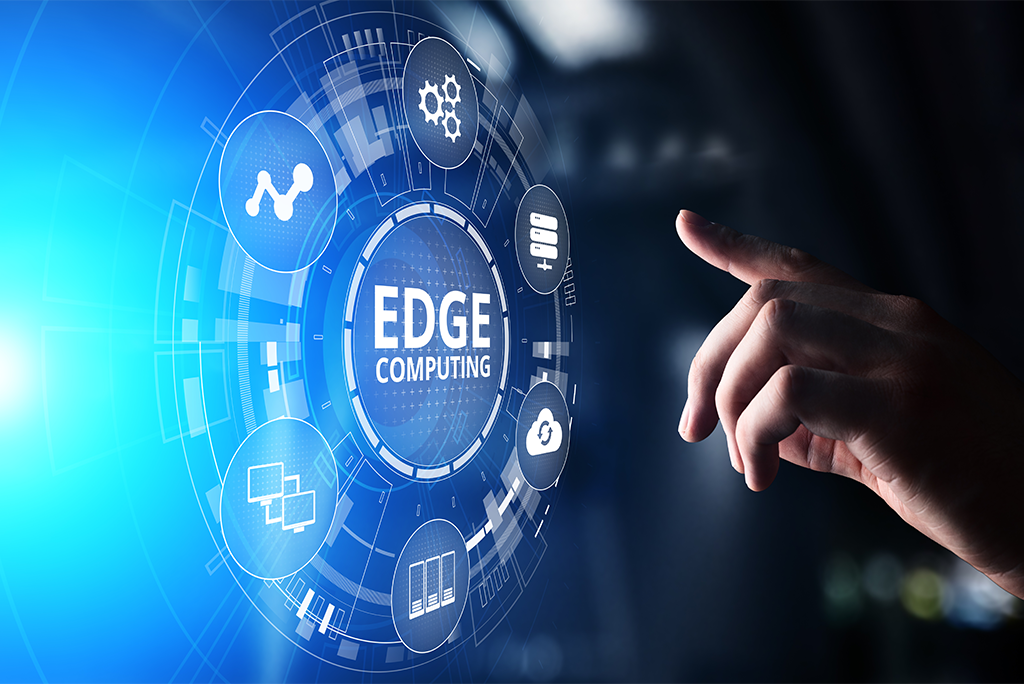
For years, cloud computing meant sending data to a faraway data center, processing it there, and waiting for results to travel back. That model is showing its limits. As AI applications demand instant responses and the number of connected devices keeps climbing, businesses are pushing computing power closer to where data is actually created. This shift, known as edge computing, has moved from a niche concept into a core part of enterprise IT strategy.
What Edge Computing Actually Means
Edge computing is a distributed model where data processing happens near the source of the data rather than in a centralized cloud. Instead of every sensor, camera, or machine sending raw data across the internet to a distant server, edge nodes, gateways, and local servers handle much of the work right where the data is generated. This setup supports on-device machine learning and stream analytics, enabling immediate insights and automated decisions in contexts like predictive maintenance or smart cities. The result is faster decisions, lower bandwidth costs, and systems that keep working even when internet connectivity drops.
Why the Market Is Growing So Fast
The numbers tell a clear story about momentum. The global edge computing market is projected to grow several times over within the next five years, with multiple research firms estimating compound annual growth rates between 23 and 28 percent through the next decade. Some forecasts place the market well above half a trillion dollars currently, climbing into the trillions as adoption accelerates.
What is driving this growth? Enterprises are deploying edge infrastructure to support low-latency data processing, AI-enabled workloads, real-time monitoring, and localized analytics closer to devices and users. Rising adoption of industrial automation, connected vehicles, smart manufacturing, 5G networks, IoT ecosystems, and data sovereignty requirements continues to strengthen demand. Simply put, organizations across retail, healthcare, logistics, and manufacturing have realized that cloud-only architectures cannot keep pace with how fast their data is growing and how quickly decisions need to be made.
AI at the Edge Is the Biggest Story Right Now
The single most important development reshaping edge computing today is the arrival of AI directly on edge hardware. AI-specific edge chips bring unprecedented compute power to smaller, energy-efficient devices, opening the door to use cases ranging from AI-driven retail kiosks to predictive maintenance in industrial settings. Edge AI is also evolving quickly, moving beyond classic machine learning into multimodal and generative inference, which is pushing a new wave of inference-optimized silicon and software stacks.
This is playing out visibly in the chip industry right now. Major chipmakers have announced new entries into the AI PC and edge device market, signaling that AI workloads are increasingly expected to run beyond the data center and out at the edge. New superchips combining processors and graphics chips are beginning to appear in laptops and desktops from major PC brands, designed specifically to handle AI tasks locally rather than relying on cloud connections.
Robotics and industrial AI are seeing similar momentum, with new chip platforms built specifically for autonomous mobile robots and humanoid machines, alongside new PC chipsets featuring powerful neural processing units focused on agentic experiences, where a device can complete complex tasks on a person's behalf. On the high end of physical AI, new edge platforms are now bringing data-center-class AI capability directly to physical machines like robots and industrial equipment.
NPUs, Quantization, and Smaller, Smarter Models
A quieter but equally important trend is happening inside the silicon itself. Neural Processing Units are becoming standard components in edge devices, handling AI tasks while consuming minimal power. Cutting-edge chips now achieve remarkable efficiency, making them several times more effective than general-purpose processors for neural network tasks.
At the same time, model optimization techniques are making AI more practical to run locally. Quantization is shrinking large AI models by using lower-precision numbers without significantly sacrificing accuracy, allowing teams to deploy models that are several times smaller than their originals. This matters because it allows sophisticated AI features to run directly on a phone, a factory sensor, or a retail camera, without needing a constant connection to a cloud server.
Real Results in Manufacturing and Healthcare
Edge AI is no longer experimental in industrial settings. Manufacturing is leading adoption with measurable returns. Predictive maintenance systems that monitor equipment continuously and detect anomalies just before failure are reporting significant reductions in unplanned downtime, while automated visual inspection systems are meaningfully improving quality detection rates in many deployments.
Healthcare is following closely behind. Wearables now analyze vital signs in real time, and medical imaging equipment provides instant preliminary analysis, giving clinicians faster insights without patient data ever leaving the facility.
Security Is Becoming Proactive, Not Reactive
As more devices sit at the edge, the attack surface grows with them. The encouraging shift is that security strategy is changing in response. Security at the edge is no longer purely reactive. Organizations are increasingly leaning on predictive, AI-enhanced protection models that monitor threats proactively across distributed devices and micro-environments. For industries running unattended hardware in remote locations, this kind of built-in, hardware-level security is becoming a baseline requirement rather than an optional upgrade.
5G and the Hybrid Cloud-Edge Model
Connectivity upgrades are unlocking new edge use cases too. As advanced 5G networks become widely available, edge computing gains a stronger connectivity backbone. Faster speeds and consistent low-latency connections are enabling drones, AR and VR training systems, industrial machinery, and autonomous transport networks to perform more reliably than ever before.
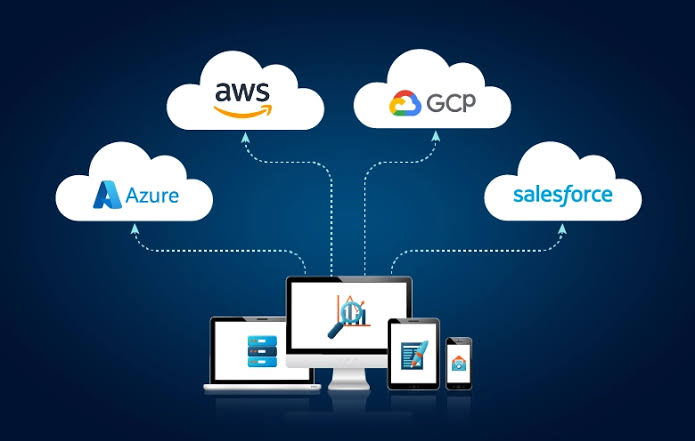
Importantly, edge is not replacing the cloud, it is working alongside it. Hybrid architectures have evolved into a coordinated system where the cloud manages large-scale analytics and model training while the edge handles real-time, time-sensitive processing. The strategic question for most enterprises today is no longer cloud or edge, but how to make both work together efficiently.
What This Means Going Forward
Edge computing sits at an important inflection point. The technology has matured past pilot projects and is now embedded in how manufacturing lines, hospitals, retail stores, and transportation networks operate day to day. With specialized AI chips becoming more efficient, faster wireless networks expanding, and security models becoming smarter, the edge is positioned to handle an increasing share of the world's real-time intelligence. For businesses still relying purely on centralized cloud models, the message from current market data is clear: the shift toward distributed, intelligent computing at the edge is accelerating, not slowing down.