.webp)
Let's Start With a Simple Question
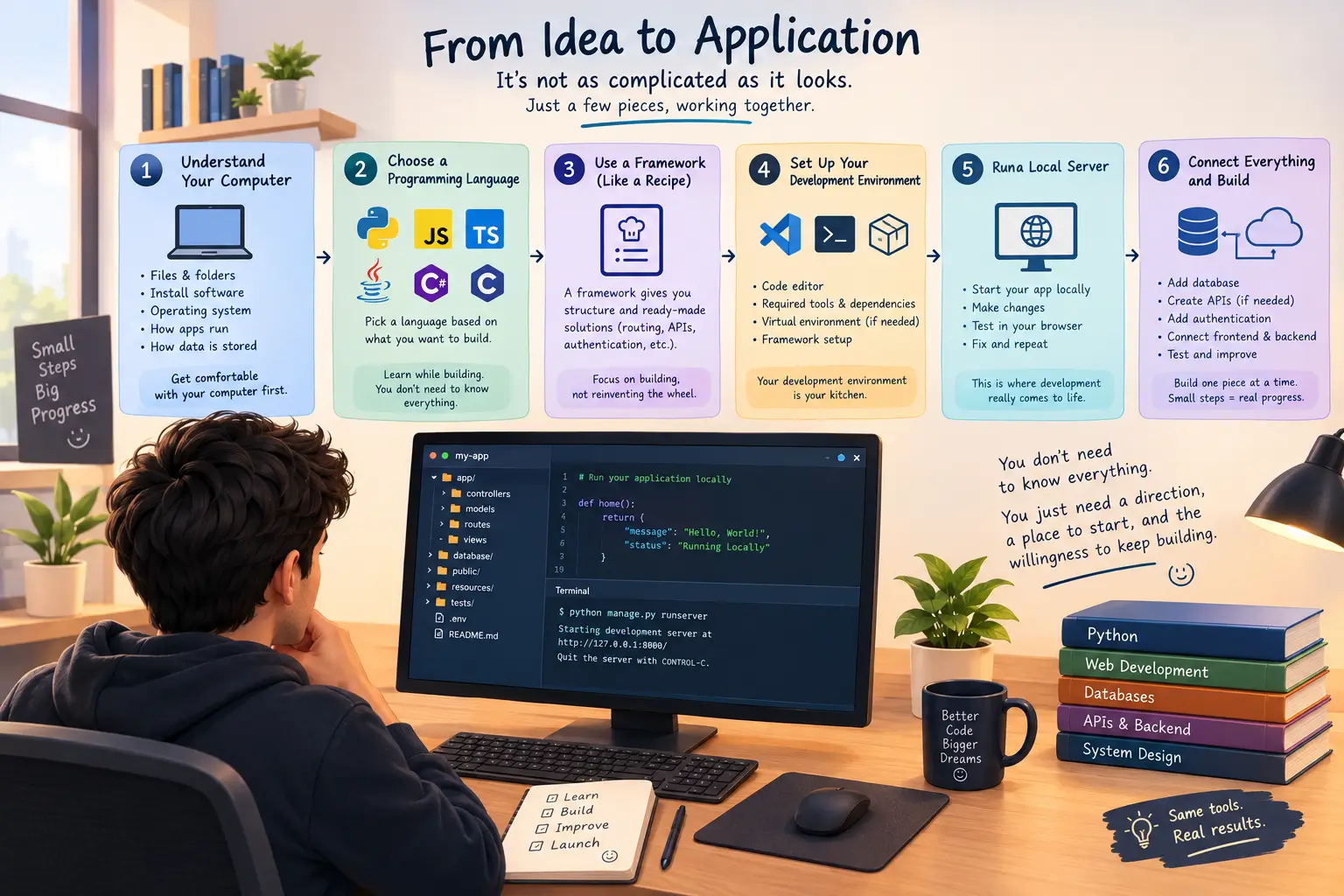
If you have ever hired a web development agency or read a software development proposal, you have probably seen the word "framework" thrown around like everyone already knows what it means. Here is the simple version. A framework is like a pre-built kitchen for a chef. You could build your own kitchen from scratch every time you want to cook, choosing every pipe, every socket, every cabinet. Or you could walk into a kitchen that already has the stove installed, the plumbing connected, and the cabinets organized, so you can focus on actually cooking the meal.
Laravel is one of those kitchens, built specifically for PHP, one of the most widely used programming languages for websites. And out of all the frameworks available to a custom software development company, Laravel has become one of the most requested by name, whether the project is a small business site or a full SaaS product build.
A Quick Origin Story
Laravel was created by a developer named Taylor Otwell, who was frustrated with the PHP tools available at the time. He has since described that stretch of PHP's history bluntly, admitting the ecosystem was in what he called a genuinely dark place before he started building something better. So he built something cleaner, borrowed the best ideas from modern frameworks in other languages, and released it as free, open source software.
The turning point for Laravel's business side is one of those stories founders love. When Taylor Otwell later launched Laravel Forge, a server deployment tool for Laravel apps, he picked up thousands of paying customers within a month, a moment he still jokes about simply as, "Whoops, product-market fit." What started as one person's side project scratching his own itch is now one of the most widely used web frameworks in the world, powering a company built entirely around making developers happy, which remains Taylor's stated mission to this day.
How Laravel Compares to the Competition
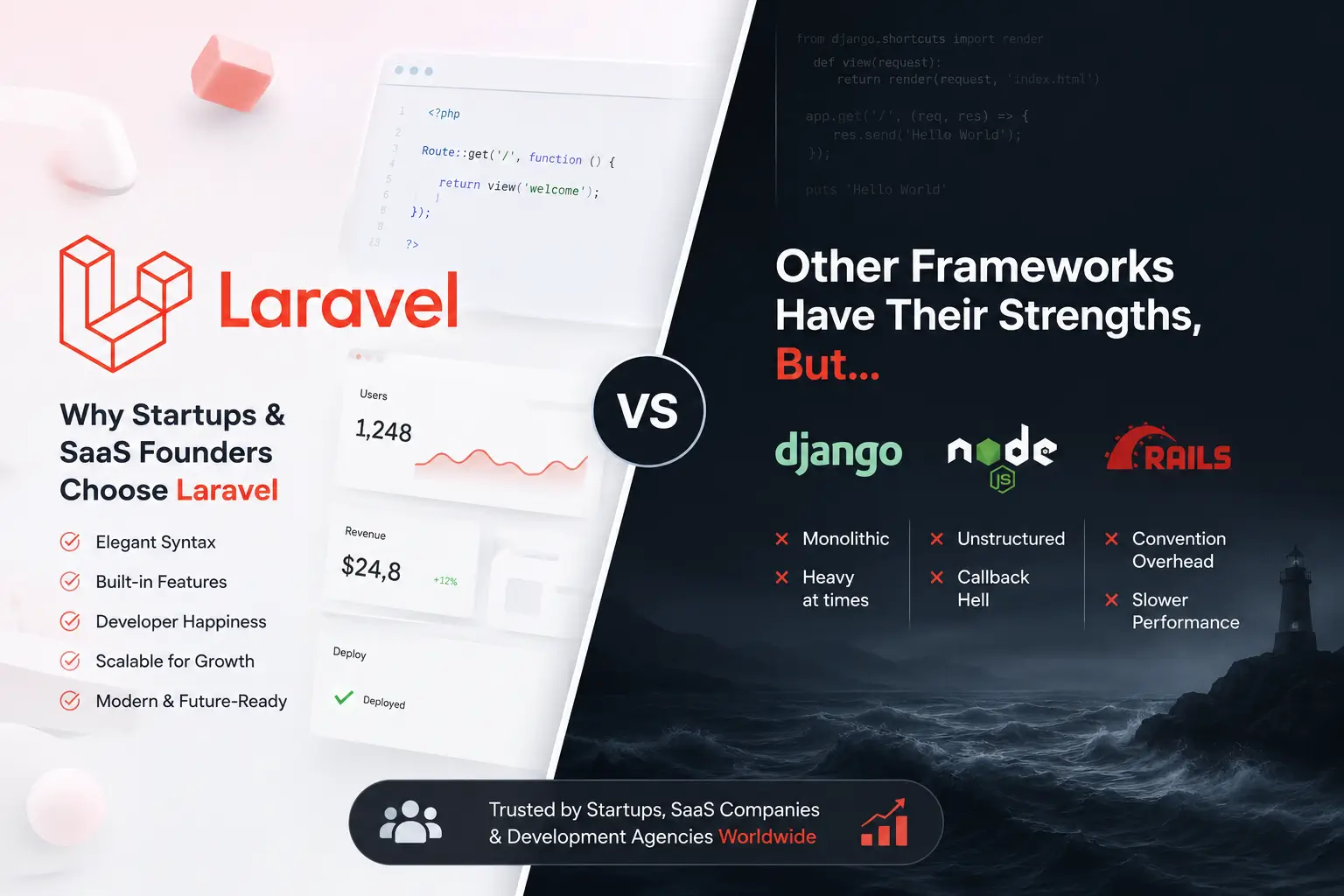
There is no such thing as an objectively "best" framework for every web application development project. The right choice depends on the product, the team, and the timeline. But when Laravel is placed side by side with its biggest rivals, some clear patterns show up, patterns that repeat across almost every client conversation regardless of industry.
Laravel vs Django
Django is Python's answer to the same problem Laravel solves in PHP. Both are considered "batteries included" frameworks, meaning they come packed with built-in tools instead of forcing developers to assemble everything from separate pieces. Django has a reputation for being extremely disciplined and structured, which data-heavy platforms and scientific applications often love. Laravel, on the other hand, tends to feel friendlier for building fast, visually rich web applications and is often the faster path for a startup web development timeline, especially for teams building customer facing products rather than internal data tools.
Laravel vs Node.js and Express
Node.js lets developers use JavaScript on the backend, which sounds appealing since the same language can run on both the frontend and backend of a website. Express, the most common framework built on Node.js, is intentionally minimal. That flexibility is powerful, but it also means more decisions land on the developer's shoulders early on, from choosing a database layer to setting up authentication from scratch. Laravel takes the opposite approach. It hands developers a fully formed structure from day one, which tends to mean fewer early mistakes and faster delivery for standard business applications, though Node still wins for teams that need extremely high concurrency, like chat applications or real-time trading tools.
Laravel vs Ruby on Rails
Rails was Laravel's biggest early influence, and the two frameworks still share a lot of philosophy, including the belief that developer happiness leads to better software. Rails has a slightly older, smaller community these days, while Laravel's ecosystem has grown into one of the largest and most active in web development, with a constant stream of new packages, tutorials, and hosting options built specifically around it. For a founder comparing custom software development companies today, that difference in community size often translates into an easier time finding experienced Laravel developers and getting problems solved quickly.
Where Laravel Consistently Comes Out Ahead
Across most comparisons, a few Laravel qualities keep showing up as the deciding factor for teams that choose it, and they are usually the same qualities that matter most once a project moves past launch and into years of actual use.
It reads like plain English. Laravel's code style is famous for being genuinely readable, even for someone who is new to programming. That matters more than people realize, because readable code is easier to fix, hand off to a new developer, or maintain years down the line, which is often where the real cost of a web application shows up.
It comes with security built in. Laravel automatically protects against some of the most common ways websites get hacked, including SQL injection and cross-site scripting, without the developer needing to remember to add that protection manually. In practice, this is usually the first thing a thorough code review checks for, and Laravel projects tend to arrive at that check already covered.
It scales without a rebuild. A small business website and a large enterprise SaaS platform can both run on Laravel, using the same core structure. Businesses do not need to throw away their foundation and start over once they start growing, which is one of the most expensive mistakes a growing company can make with the wrong framework choice.
It has a genuinely enormous community. When something goes wrong, there is almost always someone who has already solved that exact problem and shared the fix publicly, which shortens the distance between a bug appearing and a bug getting fixed. This is also why it tends to be easier and more cost effective to hire Laravel developers compared to niche or less popular frameworks.
Laravel in the Public Sector
Government websites have very specific needs. They need to be secure because they often handle sensitive citizen data. They need to be accessible to people with disabilities. They need detailed audit trails so agencies can prove who did what and when. And they need to survive being maintained by whichever developer or agency inherits the project years later, not just the original builder.
It is worth being upfront here: Laravel is not officially declared as "the government framework" anywhere the way some enterprise vendors get formally adopted. But across the world, public sector teams keep landing on it anyway, often for practical reasons rather than any grand mandate. Regional e-governance initiatives across parts of Asia and Africa have leaned on Laravel repeatedly, frequently paired with tools like Vue.js or Livewire to deliver a responsive, secure experience for citizens, with certain citizen services portals inspiring similar city-level projects elsewhere.
Part of the appeal comes down to Laravel's practical toolkit for exactly the problems governments care about most. Activity logging packages make it straightforward to maintain a detailed record of every action taken on a system, which matters a lot for accountability in public services, and Laravel's front-end tools make it easier to build interfaces that meet accessibility standards so that citizens of all abilities can actually use the platform. Smaller local government sites have also chosen Laravel for the same reasons, valuing easy citizen access to services alongside strong usability for people with disabilities. It is a good reminder that Laravel is not just for flashy startups. It quietly powers a lot of the boring, essential infrastructure that keeps everyday services running, the kind of project where a framework's reliability matters more than its reputation.
What's New: The Latest Laravel Upgrade
Laravel does not sit still, and the newest major release is a good example of how the framework keeps evolving without making life difficult for existing users. The team behind Laravel has focused heavily on avoiding breaking changes, choosing instead to ship steady quality of life improvements throughout the year so existing applications do not break. That might sound like a small thing, but for any business running a Laravel application, it means upgrades are something you plan for a weekend, not something you dread for months.
A few standout additions from the latest release are worth knowing about even if you are not a developer, because they say a lot about where the framework is heading.
Laravel now includes a first-party AI toolkit built directly into the framework, giving developers a unified way to add text generation, automated agents, and content generation features without bolting on a patchwork of third-party tools. For a business owner, that translates into AI-powered features, like smart search or automated customer support tools, being faster and cheaper to build than they used to be, which matters a great deal for SaaS development timelines specifically.
Real-time features, like live notifications or the kind of "who else is viewing this page" indicators you see on modern apps, are now built natively into the framework instead of requiring complicated third-party workarounds. Early performance tests suggest a modestly priced server can now handle tens of thousands of concurrent connections, which removes a real cost barrier for smaller companies that previously could not afford real-time features.
The official starter kits also brought back proper team based multi-tenancy, improving on earlier attempts, letting users work across two different team accounts in separate browser tabs at the same time, something the older approach simply could not do, a detail that matters a lot for any multi-tenant SaaS application.
None of these updates require existing businesses to panic. Reports from across the Laravel community suggest the average migration time for a medium sized application is only a few hours, not weeks, which is a rare thing to say about a major framework upgrade.
So, Should You Choose Laravel?
If you are a business owner trying to decide on a framework and you do not code yourself, here is the honest, boiled down version. Choose Laravel if you want something that a wide talent pool already knows how to work with, that will not force you into a painful rebuild if your business grows, and that comes with strong security defaults instead of leaving that entirely up to your developer's memory. It genuinely shines for customer facing platforms, internal business tools, e-commerce, SaaS products, and yes, even the kind of citizen facing government portals that need to be trustworthy above all else.