.webp)
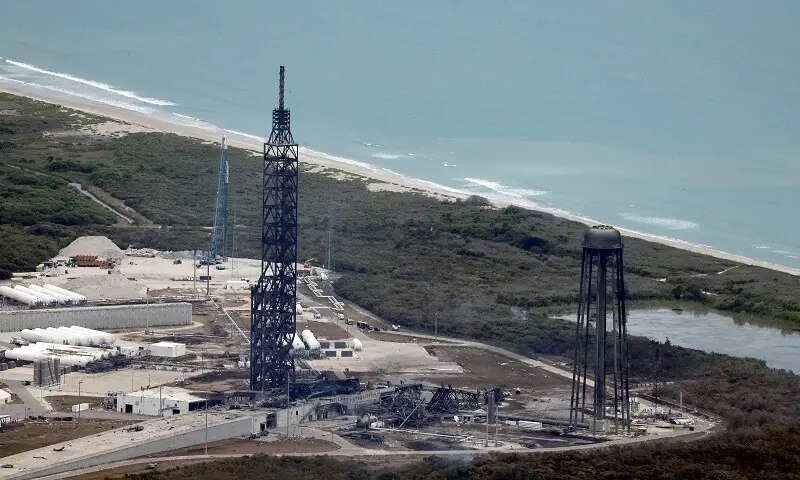
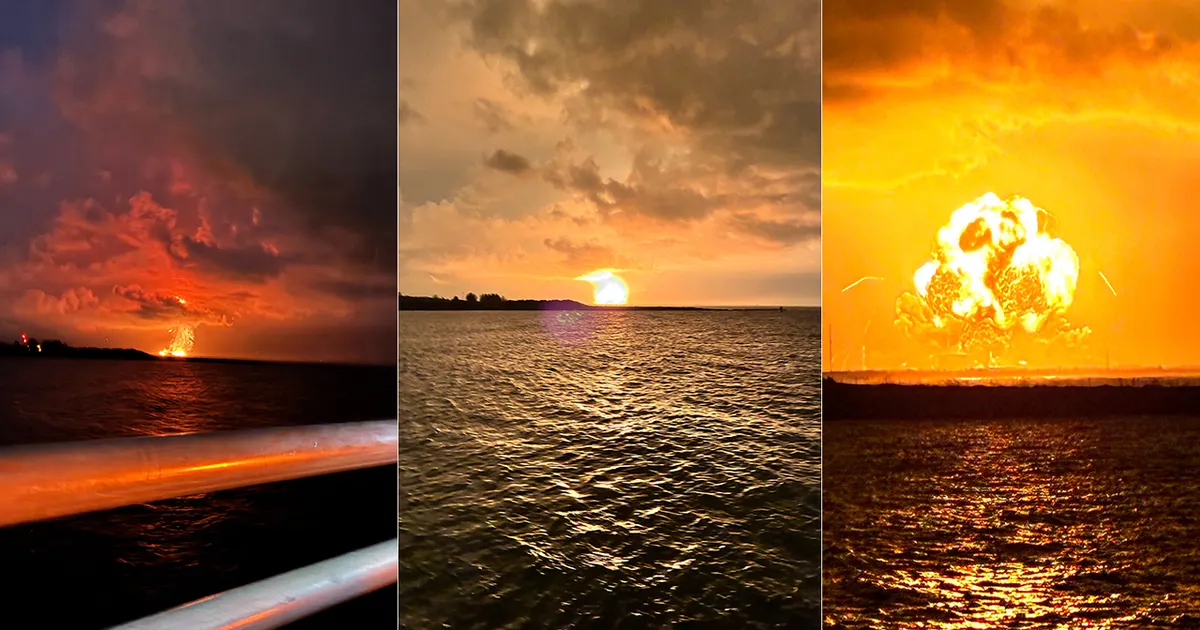
On the morning of May 29, 2026, what was supposed to be a routine pre-launch engine test at Cape Canaveral Space Force Station ended in a fireball.
Blue Origin's New Glenn rocket — one of the most powerful heavy-lift vehicles ever built outside of SpaceX's Starship program — exploded during a static fire test, destroying the rocket entirely and leaving its launch pad in ruins. Sources familiar with the damage described the facility as "practically destroyed." Engineers are now expecting a disruption of at least six months, possibly much longer.
For Jeff Bezos, this is more than a technical setback. It is a direct hit to two of his most ambitious ventures: Blue Origin's push to become a credible player in the heavy-lift rocket market, and Amazon's race to deploy a global satellite internet network that competes with Elon Musk's Starlink. With regulatory deadlines looming, billions of dollars invested, and NASA contracts now hanging in the balance, the stakes could not be higher.
This is the full breakdown of what happened, why it matters, and what comes next.
The Explosion: What Actually Happened
The New Glenn rocket was being prepared for a launch scheduled for the following week. During a static fire test — a standard pre-flight procedure where the engines are ignited while the rocket remains anchored to the pad — something went catastrophically wrong. The explosion that followed was powerful enough to destroy not just the rocket, but the launch infrastructure itself.
The booster that was lost had been given an unofficial name: "No, It's Necessary" — a reference to a line from the 2014 science fiction film Interstellar, keeping in line with Blue Origin's tradition of naming its vehicles with philosophical undertones. It is now a total loss.
Blue Origin has not yet publicly disclosed the technical root cause of the explosion. The FAA, which oversees commercial launch licensing in the United States, is expected to ground New Glenn launches during its investigation — a process that could itself take months before a return-to-flight is authorized.
What makes this incident particularly damaging, beyond the physical destruction, is that Blue Origin operates only one launch pad for New Glenn at Cape Canaveral. There is no backup facility to fall back on while repairs are made. Every day the pad is out of commission is a day Blue Origin cannot fly — and the customers depending on it cannot afford to wait indefinitely.
Amazon's Kuiper Constellation: Racing Against a Regulatory Clock
Of all the downstream consequences from this explosion, Amazon's Project Kuiper — its answer to SpaceX's Starlink — is perhaps the most immediately threatened.
Amazon has invested heavily in building a low Earth orbit (LEO) broadband constellation of more than 3,200 satellites. The goal is to provide global high-speed internet access, directly competing with SpaceX's Starlink, which already has millions of subscribers worldwide. To maintain its FCC operating license, Amazon must deploy a significant portion of its constellation by a regulatory deadline in July 2026 — and it was counting on New Glenn to get there.
New Glenn's large payload fairing and heavy-lift capability made it uniquely suited for batch-deploying Amazon's satellites efficiently. With that rocket now grounded and its launch pad destroyed, Amazon faces a logistics nightmare.
The company has previously brought in additional launch partners — including, notably, SpaceX — to reduce its dependence on any single rocket. But that diversification has limits. SpaceX's Falcon 9, the workhorse of the commercial launch industry, can carry roughly half as many Amazon Kuiper satellites per mission compared to New Glenn. Replacing New Glenn's planned launches with Falcon 9 missions would require doubling the number of flights, at significant additional cost and scheduling complexity.
Analysts at Analysys Mason, a leading space consultancy, point out that Amazon has already absorbed most of the near-term available capacity from other heavy launch providers globally. There simply is not a lot of excess rocket capacity sitting idle in the market today. The heavy-lift segment is tight, and Blue Origin's absence creates a gap that cannot easily be filled in the short term.
If Amazon misses its FCC deployment milestone, it risks regulatory complications that could jeopardize its operating license — a scenario the company will be desperate to avoid. Expect intense negotiations with SpaceX, United Launch Alliance, and possibly international providers in the coming weeks.
NASA's Moon Plans Take a Hit
Amazon's satellite woes are not the only casualty of Thursday's explosion. NASA's lunar ambitions have also been pulled into the fallout.
New Glenn was scheduled to launch Blue Origin's first Blue Moon lunar lander later in 2026 — a significant milestone for the company's commercial lunar program. More critically, just days before the explosion, NASA awarded Blue Origin a contract to deliver two lunar rovers to the Moon's surface ahead of the Artemis 4 crewed mission, currently planned for 2028.
NASA's Artemis program is already one of the most logistically complex and politically scrutinized space initiatives in decades. Any disruption to the supply chain of lunar deliveries — rovers, landers, equipment — has cascading effects on the timeline for putting astronauts back on the Moon.
The space agency confirmed on Thursday that it would assess the near-term impact on its Artemis and Moon Base programs. However, it stopped short of announcing whether any missions would need to be reassigned to alternative providers.
The challenge with reassignment is significant. Lunar payloads are not generic cargo — they are engineered around the specific launch vehicle they are designed to fly on. The structural loads, vibration profiles, payload fairing dimensions, and trajectory parameters all differ between rockets. Switching a lunar lander or rover from New Glenn to an alternative rocket is not a matter of simply rebooking a ticket. It requires engineering reviews, potentially redesigning hardware interfaces, and requalifying the payload — all of which takes time and money that NASA's tightly managed Artemis schedule may not accommodate easily.
Blue Origin's Single Point of Failure
The explosion has exposed a structural vulnerability in Blue Origin's operational setup that the industry has quietly noted for some time: the company has only one launch pad for New Glenn.
SpaceX, by contrast, has multiple launch facilities across Florida and Texas, giving it the flexibility to reroute operations when one site is unavailable. When SpaceX's Falcon 9 exploded on the launch pad back in 2016 — destroying the rocket and its payload in a pre-launch fueling test — it was a devastating incident. Yet SpaceX was able to resume launches within four and a half months by shifting operations to a second Florida pad. The full repair of the damaged facility took over a year, but the business kept flying.
Blue Origin does not have that luxury. With only one New Glenn launch pad operational, a months-long ground-up rebuild means a months-long complete halt to New Glenn flights. There is no pad to shift to. Every contract, every scheduled mission, every satellite batch is pushed back by the full duration of the repair timeline.
This is not just a short-term operational problem. It is a credibility issue. Customers selecting launch providers weigh reliability and schedule assurance heavily. An incident like this — combined with limited infrastructure redundancy — will factor into how future contracts are awarded, even after Blue Origin returns to flight.