.webp)
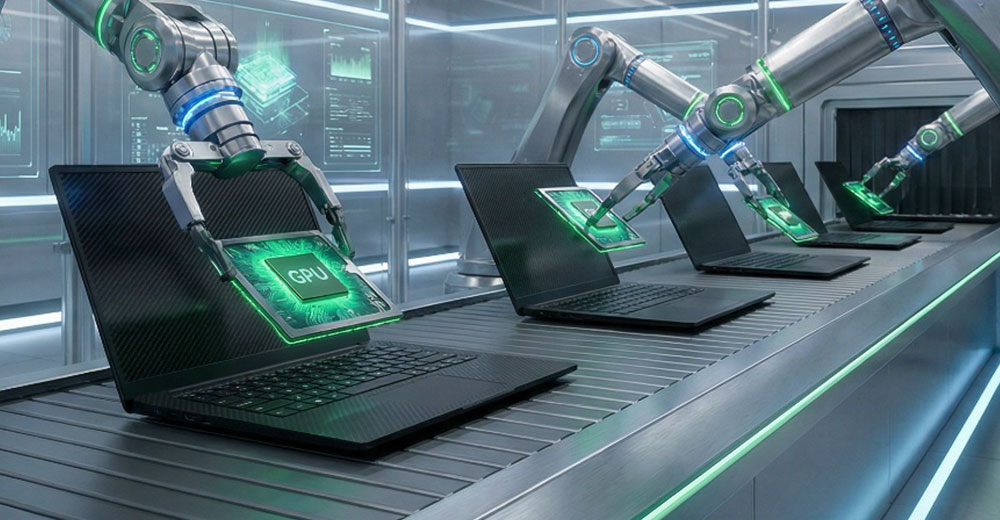
The tech industry reshapes itself every couple of decades. IBM's grip on the PC crumbled when Microsoft and Intel took the wheel. The smartphone quietly made the desktop irrelevant for most consumers. Now, with artificial intelligence rewriting the rules of computing, a new seismic shift may be forming — and Nvidia appears to be at the centre of it.
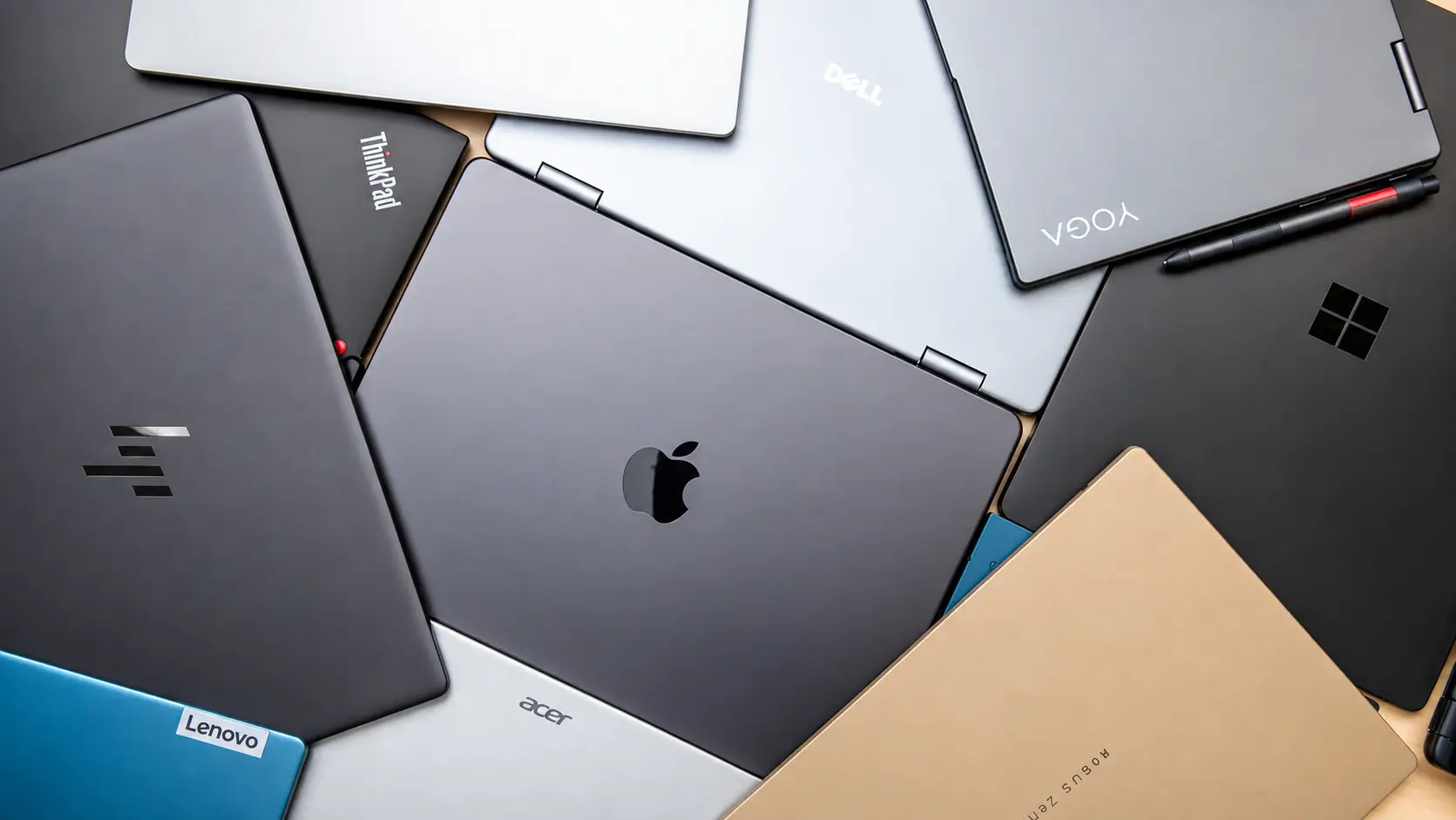
Reports have been circulating that Nvidia, whose GPU dominance has made it the defining company of the AI era, is actively exploring the acquisition of a major PC manufacturer. It sounds bold. It might also be inevitable.
Why Nvidia Would Want to Own a PC Brand
On the surface, the move seems counterintuitive. Nvidia currently operates with gross margins that most hardware companies can only dream of — somewhere around 70%. PC manufacturing, by contrast, is a brutally thin-margin business. So why would Jensen Huang want in?
The answer is control. In the age of AI, a fast GPU alone is no longer enough. The memory architecture, the interconnects, the cooling system, the OS-level optimisation — all of it matters. Nvidia's Grace Blackwell platform signals that the company wants to own the full data centre stack. Owning a PC maker would extend that ambition to the desktop and laptop.
With an acquired OEM, Nvidia could skip the slow negotiation cycles with existing partners and ship AI-native machines built from scratch around NVLink, proprietary thermal solutions, and software stacks that general-purpose Windows installations aren't equipped to handle.
Who Could Be the Target?
Scale matters here — any acquisition would need to be large enough to justify the regulatory scrutiny it would inevitably attract. A few names stand out.
Dell Technologies is arguably the most natural fit. The relationship between Michael Dell and Jensen Huang is well-documented, and Dell already has deep roots in enterprise AI infrastructure. Its logistics and distribution capabilities would give Nvidia something it currently lacks.
HP Inc. brings enormous reach across consumer and education markets, though its corporate culture may sit uncomfortably alongside Nvidia's performance-first engineering identity.
Then there are the wildcard options — Razer or Asus. If Nvidia wants to preserve its aspirational brand image and focus on premium users without inheriting the baggage of managing corporate PC fleets at scale, a smaller, high-end brand might actually be the smarter play.
What Nvidia's Past Tells Us
History offers a useful lens here. Nvidia's 3D Vision technology was technically ahead of its time — a genuinely impressive stereoscopic gaming system that collapsed because it demanded too much of consumers: expensive monitors, proprietary glasses, and a commitment most weren't willing to make. Technical excellence without accessibility is a dead end.
The Shield TV told a different story. A niche product, yes, but one that built a loyal following through long-term software support and genuine quality. Nvidia proved it could manufacture hardware and stand behind it. The question is whether it can apply that discipline to a vastly more complex global supply chain.
Then there's the acquisition track record. The Mellanox deal was a quiet masterstroke — integrating high-speed networking into its data centre stack and building a moat that competitors are still struggling to cross. The attempted Arm acquisition, on the other hand, ended in a regulatory retreat that left the industry watching. Buying Dell or HP would invite similar scrutiny. Regulators would almost certainly argue that an Nvidia-owned PC manufacturer would have preferential access to the best GPUs, disadvantaging rivals like Lenovo.
The Bigger Picture: WinTel's Cracks
For over thirty years, the Windows-Intel partnership was the foundation of personal computing. That foundation is showing signs of strain. Intel is navigating serious fabrication challenges. Microsoft has been shifting its centre of gravity toward cloud services and Azure rather than the OS itself.
Meanwhile, Apple's M-series chips have demonstrated something that once seemed impossible — that consumers will happily abandon x86 compatibility if the performance-per-watt trade-off is compelling enough. An Nvidia-designed PC wouldn't simply be another Windows machine. It would likely run on Arm architecture, potentially paired with a highly optimised build of Windows or even a Linux-based system built around Nvidia's CUDA ecosystem. That's not a PC upgrade — it's a different category of device.
What Nvidia Would Need to Get Right
The engineering case is strong. The execution case is harder. For this to work, Nvidia would need to solve several things simultaneously.
Power efficiency is the first hurdle. Nvidia's high-end GPUs are power-hungry by design. A genuinely competitive laptop would need to match Apple's efficiency benchmarks — no small feat.
Ecosystem openness is the second. Nvidia's instinct has sometimes been to build closed, proprietary systems. That worked in the data centre. In the consumer PC market, it's a liability. Software developers build for the widest possible hardware base, and any Nvidia machine that alienates that community will struggle.
The thorniest challenge, though, is partner relations. The moment Nvidia becomes a PC manufacturer, it becomes a direct competitor to the very companies it supplies with GPUs. Maintaining a credible firewall between its chip business and its PC business would require a level of organisational discipline that few companies in this industry have managed.
The Bottom Line
An Nvidia PC acquisition is not the most likely outcome — but it's not a fantasy either. Jensen Huang has a history of making bets that look reckless until they don't. The company has the financial firepower, the silicon, and the AI software ecosystem to build something genuinely different in the Windows PC market.
What it doesn't have yet is the operational DNA of a hardware company working at consumer scale, or the political capital to navigate what would be one of the most scrutinised acquisitions in tech history. The rumour may come to nothing. But if it does happen, it won't just be a corporate deal — it'll be a declaration that the generic PC era is finished.