.webp)
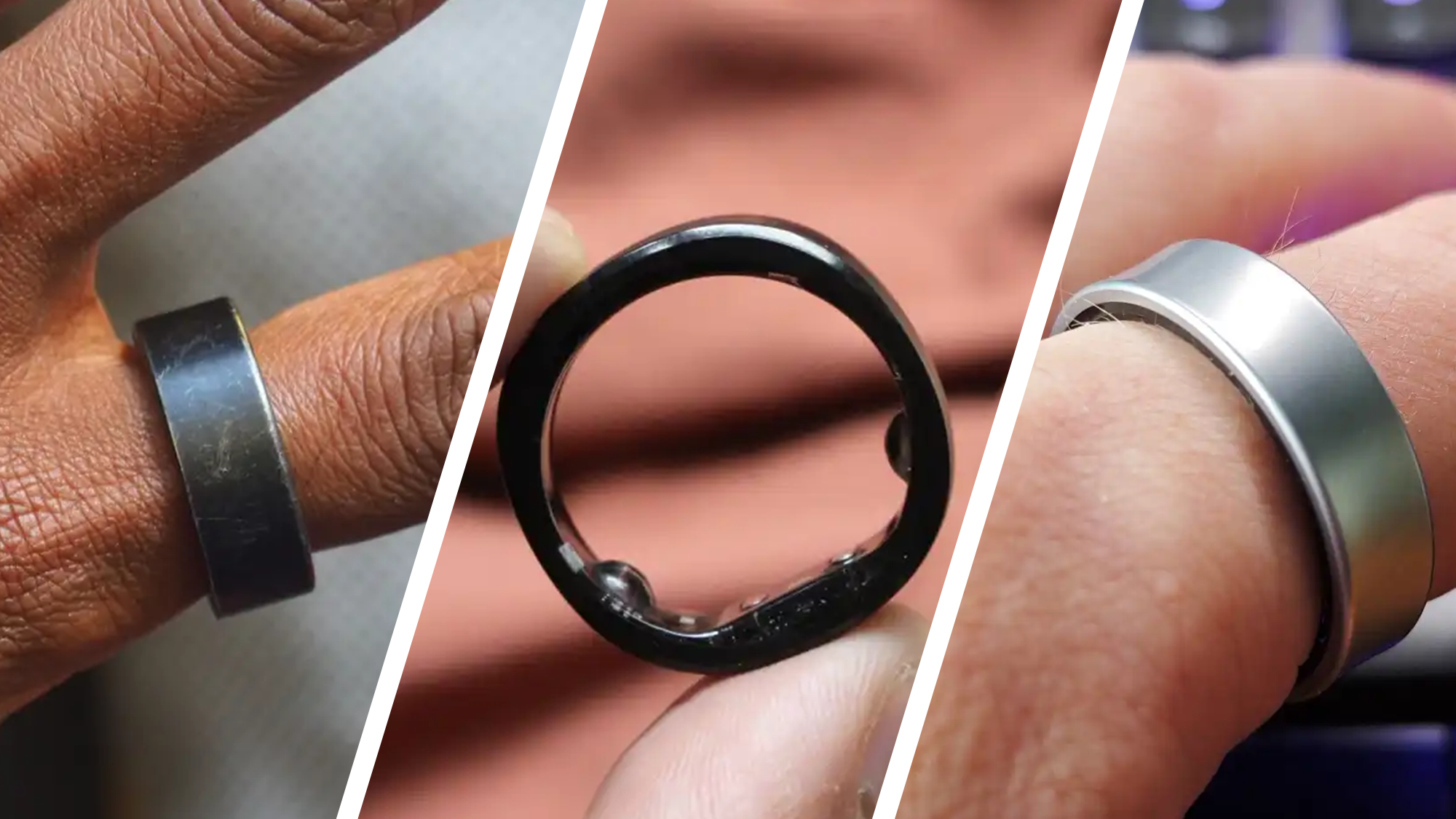
Smart rings have stopped being a novelty. In 2026 they are a real alternative to a screen on your wrist, and the market now has serious options at several price points. But the sticker price is only half the story. Some of these rings are cheap to buy and expensive to keep. Others cost more upfront and never bill you again.
This guide covers the best smart rings you can buy right now, how they stack up against smartwatches and fitness bands, and how to avoid the trap of buying a mystery ring from a random Amazon listing.
What a Smart Ring Actually Does
Every mainstream smart ring does roughly the same job. It sits on your finger, reads your pulse with optical sensors, tracks skin temperature trends, and uses movement to estimate sleep and activity. From that data it gives you scores for sleep, readiness and recovery.
Here is the part most reviews gloss over. A ring never sees your brain waves. Every sleep stage it shows you is an educated guess built from heart rate, movement and temperature. That is useful for spotting trends over weeks. It is not a medical diagnosis. Treat the numbers as a conversation starter with your own body, and when something looks seriously off, see a human professional instead of arguing with an app.
The Best Smart Ring Overall: Oura Ring 5
Oura launched the Ring 5 in late May and shipped it in early June 2026. It is now the ring everyone else gets measured against. It is the smallest ring the company has made, roughly 40 percent smaller than the Ring 4, with battery life of up to nine days, and it works with both iPhone and Android.
The price starts at $399, with premium finishes like Gold, Stealth, Brushed Silver and Deep Rose at $499. That is $50 more than the Ring 4 launched at.
The catch is the membership. You need a subscription to unlock the full app, and it runs $5.99 per month or $69.99 per year. Without it, the ring is a shadow of itself. Reviewers keep raising this as the main complaint, and they are right to.
Buy it if you want the most polished app, the deepest sleep and recovery insights, and strong cycle tracking, and you are fine renting your own health data month after month. If the Ring 4 is already on your finger, most of the new software features are coming to it anyway, so there is little reason to upgrade just for the hardware.
The Best Ring With No Subscription: RingConn Gen 3
RingConn Gen 3 is the one to look at if a monthly bill makes you grind your teeth. It costs $349 once, and that is the entire price. Sleep tracking, heart rate variability, and the new features all come included.
It is also the most interesting ring of the year because it does something others do not. It has a small vibration motor, so the ring can nudge you with haptic alerts and reminders instead of waiting for you to open an app. Battery life is rated at up to 14 days, which is the best in the category. Blood pressure style insights are promised, but they arrive later through an update, so do not buy it for a feature that is not live yet.
It works with iPhone and Android, comes in sizes 6 to 15, and RingConn settled its patent fight with Oura, so it can keep selling in the US.
The Best Ring for Android and Samsung Users: Galaxy Ring
The Samsung Galaxy Ring costs $399, needs no subscription, and plays beautifully with Samsung Health, especially if you already own a Galaxy phone or watch. It has a strong 10ATM water resistance rating, which makes it a good pick for swimmers.
The limits are clear. It only pairs with Android phones, and its feature set is simpler than Oura. If you want depth, look elsewhere. If you want a quiet, reliable ring that stays out of your way, this is it. It also tends to get discounted, so check prices before paying full retail.
The Wildcard: Ultrahuman Ring Pro
Ultrahuman makes some of the most interesting rings out there, and it also lives in the middle of a legal mess. Oura won a US International Trade Commission ruling that blocked the older Ring Air from being imported into the US. Ultrahuman responded with a redesigned Ring Pro at $479, which US Customs cleared in March 2026.
Then in late October, Oura filed a fresh patent lawsuit in Texas aimed directly at the Ring Pro, asking for a permanent injunction. Ultrahuman says it will fight and that the ring stays on sale. No court order has stopped sales yet, but the risk is real. If you buy one in the US, you are betting on a court case going your way. For a device you want to wear for years, that is worth thinking about.
About That Multifunction Ring on Amazon
You mentioned seeing a ring on Amazon that does a huge number of things. I could not see which listing you meant, so here is how to judge any of them.
Count the functions, then ask who is behind them. A ring crammed with promises about blood pressure, blood sugar, stress, ECG and “medical grade” accuracy from an unknown brand is marketing, not engineering. Tiny rings have tiny batteries and limited sensors. The big names earn their reputations through years of validation and software support, and that is exactly what a no name listing cannot offer.
A quick checklist before you click buy:
Does the brand have a real website, an app on the iOS and Android stores, and a support team?
Does the app require an account and a subscription you only discover after purchase?
Where does your health data go, and who can see it?
Is there a sizing kit? A ring that does not fit gives bad data, so fit matters more than features.
Does it claim to measure something no mainstream ring measures? If the big brands are not claiming it, be suspicious.
If you send me the link, I will break down that specific ring.
Rings vs Smartwatches vs Fitness Bands
Rings are best at sleep and recovery because the finger gives a strong, steady signal and you will actually wear one to bed. They have no screen, no notifications and no GPS. That is a feature for some people and a dealbreaker for others.
Smartwatches give you a screen, GPS, payments, calls and workout coaching. The trade is battery life and bulk.
Here are the strongest options this year.
Apple Watch Series 11 is the best all rounder for iPhone owners, starting around $399. It does not work with Android.
Samsung Galaxy Watch 8 and Google Pixel Watch 4 are the Android picks, both starting at about $349. Newer versions have landed too. The Pixel Watch 5 starts around $399, and Samsung launched the Galaxy Watch 9 in July, so older models are often discounted now.
Garmin Venu 4 is the choice if battery life and training depth matter more than app ecosystems. Expect around $549 and battery measured in days and weeks instead of hours.
Fitbit Charge 6 remains a favourite fitness band for people who want something simple that works across iPhone and Android.
Whoop 5.0 is a screenless strap built around recovery, and it runs on a membership model like Oura.
Amazfit Band 7 and Active 2 are the budget picks. Both punch well above their price.
The Real Cost: Subscriptions and Lock In
Here is where the wearable market gets sneaky. A $399 ring with a yearly fee costs far more than its sticker over three years, while a $349 ring with no fee costs exactly $349. Run the maths before you buy, not after.
There is also a bigger point. When your health history lives behind someone else’s subscription, you are renting your own data. If the company changes its pricing, drops a feature, or loses a patent war, you have little say. Rings and watches that keep working without a monthly fee, and let you export your data, keep you in control. That is the same principle we push at TechStop for business software. Own what you can, and be careful about what you rent.
The same goes for the growing wave of AI health coaches inside these apps. They can be helpful for spotting patterns. They should never replace your doctor, and you should know what they are doing with your data.